Interview with James Osborn
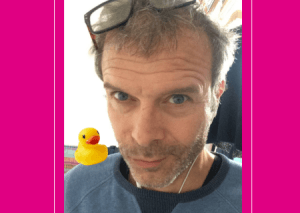
Chloe, Author of Behind the Edit interviews James Osborne
Chloe: Tell me about your journey in TV
James Osborne:
I left university with a degree in Geography, which I loved — but the world of town planning wasn’t exactly beckoning. I could have explored things like cartography, which fascinated me, or physical geography, like glaciology. But somehow, being a Londoner, I needed something with a bit more cut and thrust.
After a couple of years pulling pints and working as a gardener, a friend of my dad’s — who worked in advertising and used a post facility — managed to get me a meeting with a senior editor at a company called SVC Television. It was a commercials facilities house, and that chat turned out to be the start of everything.
Before that, though, I’d landed a job as a runner at an animation company, which was great fun. Animation’s such an intense process to get these really unique results. I learned how to read dope sheets, operate rostrum cameras, and look after real artists — people working with paint, ink, and traditional cel animation. It was fascinating.
That whole experience sparked a personal passion too. I started getting into Super 8 cameras. I'd wander down Portobello Road, picking up all sorts of weird and wonderful vintage cameras — Russian panoramic ones, Super 8s, a Bolex... I was just running around filming all the nonsense you get up to when you're young — festivals, friends, anything.
So back to SVC — I started as a runner and moved quite quickly into the library, hustling tapes and making sure the right ones went to the right jobs. Then I got into the machine room… and eventually, one day, I was promoted: “You’re an editor now.”
I thought, great! Who’s going to teach me?
Answer: no one. It was a case of “work it out yourself — off you go.”
This was in the days before Avid. It was an online facility, so I turned to a mentor and said, “Right, tell me what to learn and I’ll learn it.” He said, “Start with a dissolve between two tape decks.” So I did. That led from A to B, B to C, and so on.
A few years later, nonlinear editing started to emerge. Softimage brought out a system called Digital Studio, which was brilliant. All the tools were in one box — audio, picture, effects. No more bouncing between a Paintbox, a Henry, and an edit suite — it was all there.
From there, I went to work for a reseller who sold Digital Studio systems. I did that for a year or two, but it wasn’t really my thing — a bit dry. Luckily, off the back of that I got a job at a facility that had invested in the system, and I worked there for a few more years.
Then I took some time out to travel, get some life experience under my belt, and see the world. When I came back I jumped back into freelancing. While I’d been away, the system had been bought by Avid and started snowballing, so there was loads of work in town.
After a while, I decided to double down on this post-production malarkey and go back to school — film school, that is. I enrolled at the National Film and Television School, just as they were launching their first digital post-production it was a fantastic experience.
I was there for about 16 months. I learned a few bits of hardware and software, picked up some grading skills, and moved into online editing and DI conforming. That led to some freelance grading and digital dailies work — mostly lower-end TV rather than big features or commercials.
At the same time, the NFTS brought me back in to teach, passing on what I’d learned to students doing the same course I’d just finished.
Then came the visual effects boom. I saw it happening and decided to jump on a 12-week Nuke course — and really enjoyed it. Nuke’s a monster of a tool. I got my head around how and why VFX works, but editorial still had my heart.
I now had experience in colour, VFX, and editorial — and the area where they all overlapped was VFX editorial. That’s where I’ve spent most of my time in recent years, mostly on the vendor side, working at various facilities.
Just before the industry went a bit quiet, I did my first client-side job assisting in VFX — which was a great shift in perspective. And during this recent quieter spell, I completed two post-production supervision courses. I asked myself: what do I do with all this knowledge I’ve picked up over the years?
And the answer was clear — post-production coordination and supervision.
Chloe: after almost 30 years working in TV what are the standout landmarks to you of where things have really changed or have you felt times I know I have, but have you felt times where the industry sort of holding its breath and then suddenly something happens?
James Osborne:
I think the biggest shake-up... is actually now.
The move from analogue to digital was, of course, massive — but in hindsight, it happened in a surprisingly low-key way. I remember being pretty green at the time, still wet behind the ears, and having this conversation with a senior engineer. I just assumed tape was it — that it would always be the way. And she said, “Tape won’t be around much longer.”
I was like, “What do you mean? How’s that going to work then?”
“Files,” she said.
And I genuinely thought she was mad. “What, everything’s going to go file-based? That’s insane!”
At the time, I’d just been involved in the beta testing of Softimage Digital Studio — which was cutting edge but it had one hour’s worth of SD storage. Just one hour. So if you were trying to conform a one-hour programme, technically you could… but you’d have no room left to render. You’d hit this immediate ceiling — the idea was brilliant, but the tech just wasn’t quite there yet. You had to wait for the rest of the world to catch up.
And now? We’re talking petabytes. The smallest SD file is laughable in comparison. It’s wild how far we’ve come.
The second big shake-up for me was in 2008 — a purely economic one. I got made redundant and spent six months kicking cans down the road looking for work. But weirdly, that led to one of the best jobs I’ve ever had — a year-long gig as a lead DI colour assistant on a major Hollywood feature. Incredible experience.
Again, the tech was evolving fast. Nonlinear editing had taken off, and then what I used to call “NLG” — nonlinear grading — arrived on the scene. Autodesk had a system that started life as Colossus (I can’t remember what it ended up being called), which Peter Doyle used on King Kong and others. Then we saw Baselight, Nucoda... all vying for space.
And now, of course, we’ve got Resolve — which, in a way, is like a spiritual successor to Softimage DS. It does everything DS did, but with 20 more years of R&D and software packed into it. It’s astounding. For £250, you can get a licence for a system that can produce a proper feature film — on a laptop! I mean, the first linear suite I worked in was worth a million quid. And now I can do 1000 times more with a £250 licence and a grand's worth of kit. That’s mind-blowing.
Then there’s COVID — a different kind of shake-up. I actually worked right through it remotely, doing VFX editorial on a show at Cinesite. And hats off to them — their tech and engineering team pulled off a miracle. They turned the entire company remote in about two weeks. Loads of facilities did. Massive respect.
But again, it proves a point — these crunch points, these pressure moments, they push things forward in huge steps.
And this latest shift… feels different. There’s a lot of change in the air — and a lot of uncertainty. I find myself doomscrolling LinkedIn, reading what senior VFX producers and supervisors are saying about AI.
Some are saying, “Don’t worry, it’s just another tool — like every other tool before it.” But then I read this week that Netflix has used its first AI-generated shot in a proper production. That’s a moment. That’s significant.
I’m really curious, because no one seems to have a clear view yet on where this is all heading at least not in editorial.
There are lots of little signs, lots of small changes. But it’s one of those times again, isn’t it? Where the industry seems to be holding its breath... and something big is about to shift.
Chloe: in terms of people who are coming into the industry now, the Gen Zers, what kind of advice would you give them?
James Osborne:
Honestly, I don’t think the advice has changed much since I started out. The best bit of guidance I ever got - and still stand by is: just throw yourself into as many opportunities as you can.
If you get the chance to help out in a department, and it tickles your fancy go for it. Say yes. Try it. See where it leads.
There’s no fixed “career path” in this industry there are career journeys. It’s like one of those aerial shots of wildebeest migrating across the African plains: thousands of intertwining tracks, all roughly heading in the same direction, but no two are the same.
You might start out on the far right and end up on the far left, or you might go dead straight it really doesn’t matter. I mean, when I started in post-production, I didn’t know what I wanted to be. I just remember seeing someone using a Paintbox system maybe a Henry or a Harry and he had this digital pen and tablet, and I thought: “Wow.”
It wasn’t just typing and tech. You could be creative.
I’ve always loved painting and suddenly here was someone earning a living with a digital paintbrush. That was a revelation.
There are modern equivalents of that today. My daughter, for example she’s been using an iPad and stylus for years, and she’s already doing incredible work. She just gets masking, layering all second nature to her.
Compare that to my early days in a linear tape suite: you'd need your blue screen on one tape, your background on another, both fed into different mixer channels, everything synced manually. The whole process was clunky now it’s intuitive.
So my advice?
If you know exactly what you want to do — great. Go for it. Climb that ladder.
But if you don’t know — which is most of us, to be honest — then just try everything. Anything. Say yes until something clicks, and you find the thing that makes you want to stick around.
Chloe: One thing I’d love your perspective on is around people who are at that crucial early stage of trying to break into the industry — the point where networking really starts to matter. I feel like a lot of people are struggling with confidence, especially when it comes to how they communicate and make those first connections. What advice would you give to someone who wants to reach out and start building their network, but maybe isn’t quite sure how to go about it?
James Osborne:
Whenever I get messages on LinkedIn whatever the reason I’m always a bit surprised, honestly. People say things like, “I’m so glad you replied!” or “Thanks for taking the time!” and I’m thinking, of course I’ll reply. I’m genuinely happy to share anything useful from my experience.
It’s always a bit flattering when someone actually wants to hear about my journey. Honestly, if anyone wants to get in touch with me directly please do. You're absolutely welcome. I sometimes feel like I should be shouting from the rooftops: “Hey, editors! I’m here if you want to chat!”
I guess what I’m saying is… networking has never really been my strong suit. I’ve kept in touch with people I’ve become friends with on jobs, and they’ve become my informal network. But I’ve never been the person who goes to an industry night and walks away with a job. Most of my work has come seemingly out of nowhere — someone liked my CV, a door opened, and in I went.
So yeah, the idea of “networking” sending a thousand emails, working through a list of names I’ve never quite done it. I probably should make better use of LinkedIn. I’ve got loads of contacts on there, but I rarely go through and think, Right, who’s hiring? Who should I message?
But here’s the thing: when people do reach out personally when you can tell they’ve taken the time that really stands out. You can always spot the mass mail-outs, and they just don’t land the same way.
But if you make it personal, if there’s a genuine connection, that makes a big difference.
Behind the Edit Interviews - Recent posts

A journey through the TV industry with Richard Welsh


The Power of Deep Work: A Simple Hack That Transformed My Productivity

When Overwhelm Turns the Sofa Into a Fortress.
My Manefesto

Finding Your Tribe: A Beginner’s Guide to Building Your Support Network

If Hard Work Alone Could Create Success, the Donkey Would Own the Farm
Don’t worry, we’ll fix it in post.
Embracing the Edge of Your Abilities: A Guide for Beginners

Embracing the Madness: Why I Love Being a Post Supervisor

Learning from Failure: Embracing Growth

Surviving the Christmas Rush in the Creative Industry!
The Power of Emotional Intelligence at Work

Helping Others:The Best Investment for Your Career and Yourself
Embracing Change and Sparking Innovation
Empty Vessels Make the Most Sound: Navigating Jargon as a Post Production Supervisor

It’s Not What’s Happened to You, It’s What You Do Next:
Put On Your Own Oxygen Mask First: A Post Production Supervisor’s Guide to Surviving the Chaos

The Importance of Individuality in Post Production Supervision

Embracing the Art of Procrastination in Post Production Supervising

The Fine Art of Keeping It Professional
The Fascinating History of Television: From Experimental Tech to Everyday Essential

Navigating the Feast and Famine of Freelance Life

How to Write an Effective Cover Letter as a Post Production Supervisor in TV

Every Day is a School Day: Embracing Learning in Post Production

Embracing the Chaos: How to Handle Tech Challenges in Post Production
The power of humour

The Art of Kindness and Patience

Surviving Sick Days and Holidays as a Freelancer in TV

Navigating Conflict

Losing Your Mojo

How to deal with work anxiety

Supporting Financial Well-Being in the TV Industry

The Balancing Act: Returning to TV After Maternity Leave (And Crushing It)

Navigating Constructive Criticism: When Is It Actually Helpful?

Understanding editorial vs. production: Who does what?

Tips and tricks: Mastering efficiency in post production

The Art of Keeping Your Production Team in Sync

Post Producers vs. Post Production Supervisors

Navigating the world of post production
How to get started in Television
Lights, Camera, Confidence! How to Shine When Starting Your Career in Television